





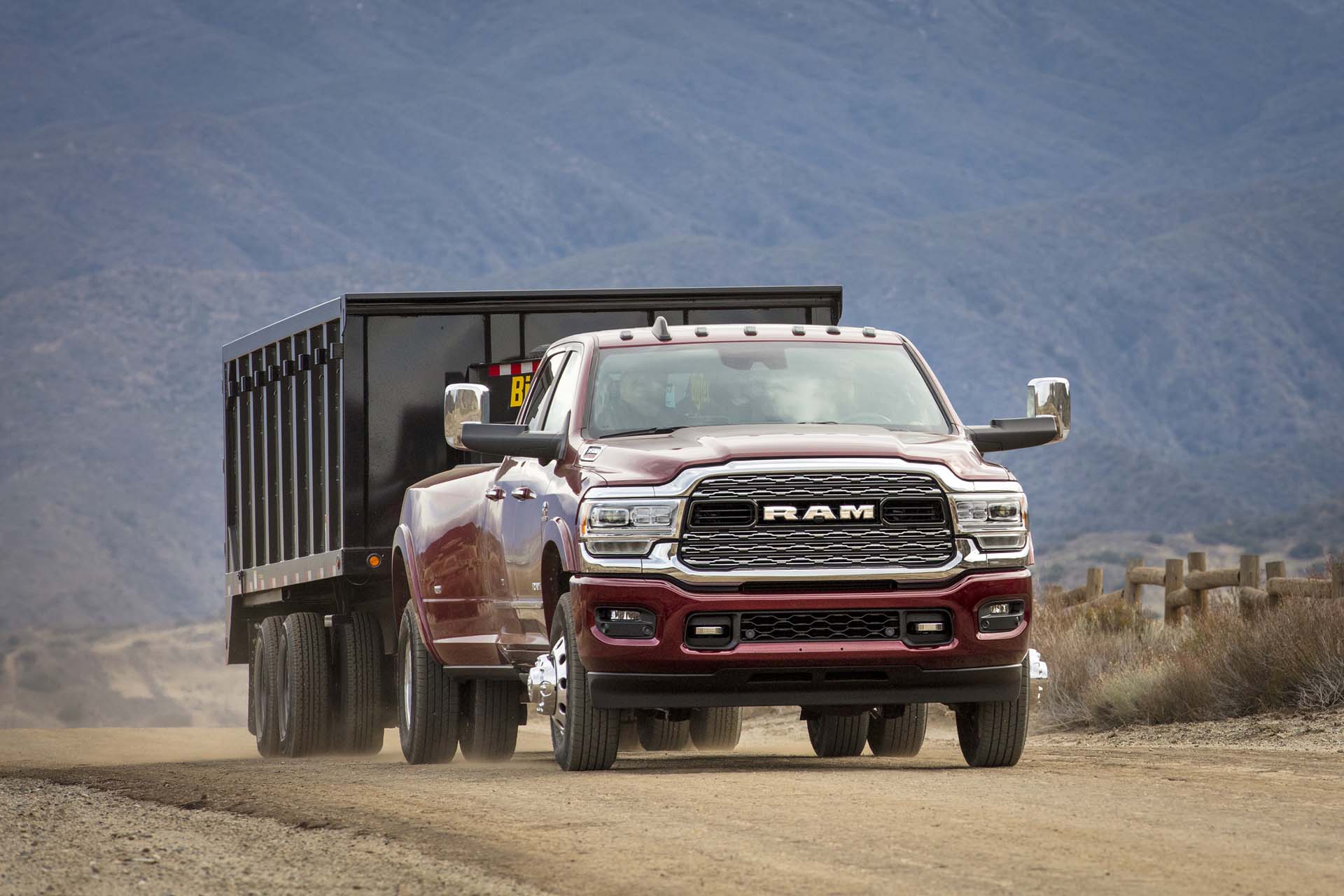
RAM trucks are built for work — but the RAM 1500 and 2500 have also drawn a wave of defect complaints and major recalls in recent years, some affecting well over a million vehicles. From software failures that disable safety systems to the notorious “death wobble,” these aren’t minor annoyances. If your RAM keeps going back to the dealer for the same unresolved problem, it may qualify as a lemon under California law. Here’s what owners report most.
Quick answer: The most common RAM 1500 and 2500 problems tied to lemon law claims include ABS/electronic stability control software failures, Uconnect infotainment glitches, tailgate and transmission defects, 6.7L Cummins fuel-system failures, and the front-end “death wobble.” If a defect substantially impairs your truck’s use, value, or safety and RAM can’t fix it after a reasonable number of attempts, you may be owed a refund or replacement.
Does California lemon law cover RAM trucks?
Yes. California’s lemon law — the Song-Beverly Consumer Warranty Act — covers RAM (a Stellantis brand) as long as the truck is under the manufacturer’s original warranty or was sold Certified Pre-Owned with a new warranty. One RAM-specific note: Stellantis has opted in to California’s updated 2025 procedures, which means if you intend to seek civil penalties you generally must send a 30-day written notice before filing — see the lemon law process for how that works. The first step is confirming your truck qualifies as a lemon, just like any other defective truck.
Common RAM 1500 problems
- ABS / stability-control software failure. In September 2024, Stellantis recalled roughly 1.22 million RAM 1500s (2019 and 2021–2024) under NHTSA campaign 24V-653 for an anti-lock brake software defect that can disable electronic stability control, adaptive cruise control, and forward collision warning — a serious safety issue.
- Uconnect infotainment glitches. Owners report freezing touchscreens, blank or rebooting displays, and Bluetooth dropouts.
- Tailgate opening unexpectedly. A recall covering more than 1.2 million 2019–2022 RAM trucks addressed misaligned tailgate strikers that could let the tailgate open while driving, spilling cargo onto the road.
- Transmission complaints. Jerking into gear, hesitation during acceleration, and rough or delayed shifting. A 2023 recall also covered a transmission control-unit weld defect that could cause a loss of drive power or park function.
- Blank digital displays. More recently, tens of thousands of 2025–2026 RAM trucks were flagged for digital instrument displays that can go completely blank while driving.
Common RAM 2500 and 3500 problems
- 6.7L Cummins fuel-system failures. High-pressure fuel pump failures can trigger stalling, loss of power, or sudden shutdowns. A separate recall addressed a heater-grid relay short that posed an engine-compartment fire risk on Cummins diesels.
- Transmission fluid leak and fire risk. NHTSA recall 22V-835 covered 2020–2023 RAM 2500/3500 trucks where pressure and heat buildup could cause a transmission fluid leak from the dipstick tube — with a risk of fire.
- AISIN transmission failures. Heavy-duty owners report harsh shifting, delayed engagement, and full transmission breakdowns, especially while towing.
- Erratic shifting and overheating. Gear slipping, delayed shifting, and transmission overheating under load.
The “death wobble” explained
One issue RAM heavy-duty owners dread by name is the “death wobble” — a violent front-end shake, usually triggered by hitting a bump at highway speed, that can make the truck feel briefly uncontrollable. It’s more common on lifted or modified trucks but not exclusive to them, and it often traces to front suspension and steering components. Because the shake can be hard for a dealer to reproduce on demand, owners frequently make multiple trips without a lasting fix. If your RAM has been in repeatedly for the same front-end shake and it isn’t resolved, that pattern is exactly what a lemon law claim addresses.
Why recalls matter for your claim
A recall or technical service bulletin is the manufacturer’s own acknowledgment that a defect is known — strong evidence in a lemon law case. It’s especially important when the prescribed remedy is a software update that doesn’t actually end the problem. If your truck keeps showing the same defect after the recall fix or repeated dealer visits, that recurring failure is the foundation of a claim. For serious safety defects, as few as two repair attempts may be enough. Ask the dealer to check your VIN and document every visit.
When your RAM qualifies — and what you can recover
A defect rises to a lemon law claim when it substantially impairs the truck’s use, value, or safety, the vehicle is under warranty, and RAM has had a reasonable number of attempts to fix it. If it qualifies, the manufacturer may have to repurchase the truck — refunding what you paid (price, taxes, fees, and finance payments) minus a mileage offset — or provide a replacement, plus incidental costs like towing and rental. Where the violation was willful, a civil penalty of up to two times your damages may apply. Our buyback guide explains the math, and our case results show representative outcomes. Because California shifts attorney’s fees onto the manufacturer when you win, this costs you nothing out of pocket. See how the process works.
Think your RAM is a lemon?
American Lemon Law Group will review your truck’s repair history at no cost. You can also look up open recalls on your VIN through NHTSA’s recall lookup. Call (877) 311-1133 or request a free case evaluation.
This article is for general informational purposes only and is not legal advice. Defect and recall descriptions reflect information reported by NHTSA, Stellantis, and vehicle owners, not a finding about any specific vehicle. Every case is different and outcomes depend on its facts. Consult a qualified California lemon law attorney about your situation.